
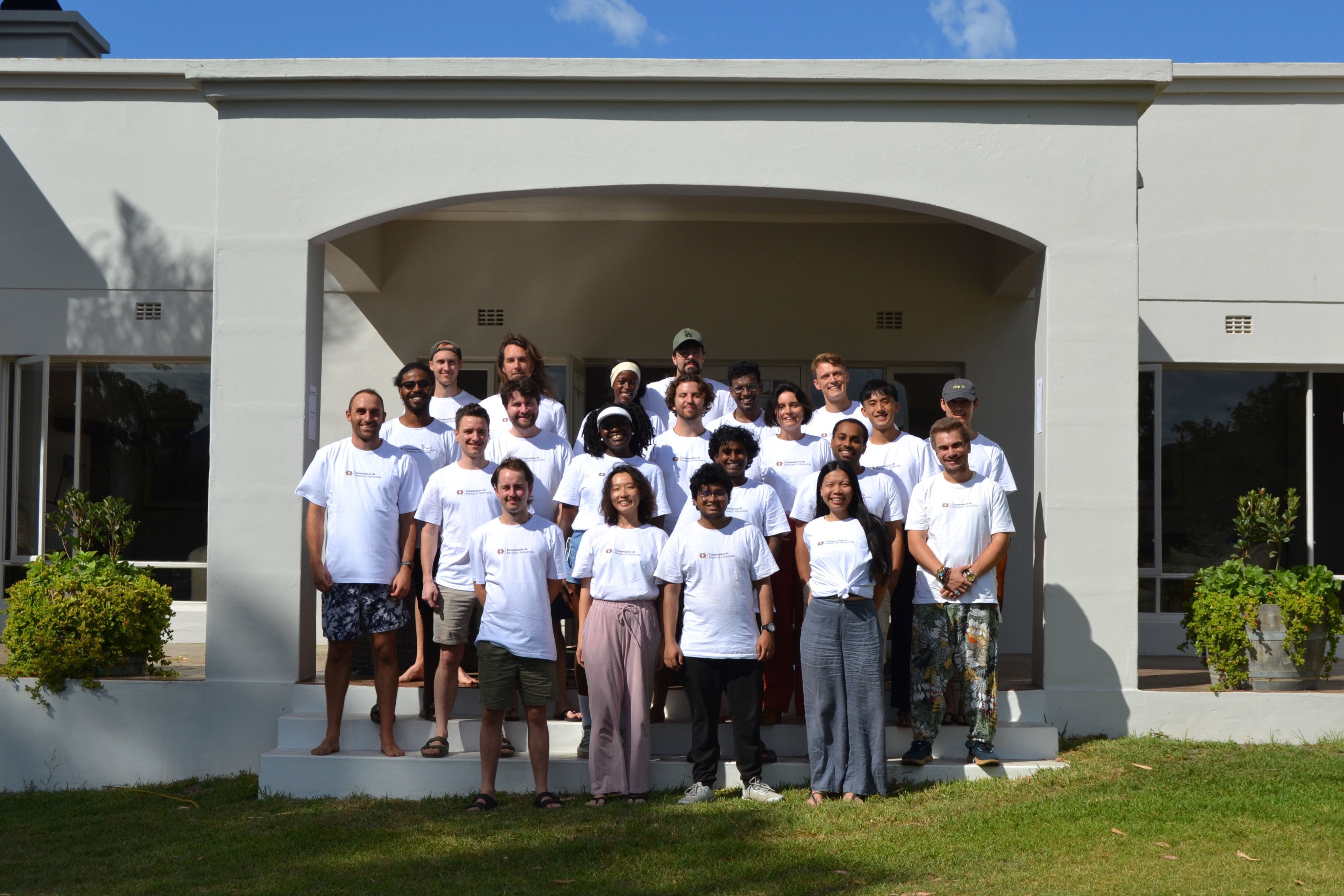
This April, the first Cooperative AI Research Fellowship concluded in Cape Town. Run by AI Safety South Africa and supported by the Cooperative AI Foundation, the 3-month programme brought together 10 fellows to research some of the most pressing questions in cooperative AI. Fellows were mentored by researchers from Google DeepMind, University of Toronto, MIT, and other leading institutions.
Fellows were selected from a highly competitive applicant pool, with around 1 in every 100 applicants accepted. The cohort brought together researchers from South Africa, Sudan, China, India, Brazil, Singapore, the United States, and Switzerland. They were invited to focus on topics ranging from multi-agent safety to gradual disempowerment and AI for human cooperation.
Throughout the fellowship, participants received world-class mentorship from expert researchers including Tan Zhi-Xuan (University of Singapore), Vincent Conitzer (Carnegie Mellon University), Michiel Bakker (MIT), Zhijing Jin (University of Toronto), Lewis Hammond (Cooperative AI Foundation), Sahar Abdelnabi (ELLIS Institute Tübingen), Joel Z. Leibo (Google DeepMind) and Max Kleiman-Weiner (University of Washington). Dedicated research managers also provided research guidance, career coaching, and project support throughout the fellowship.
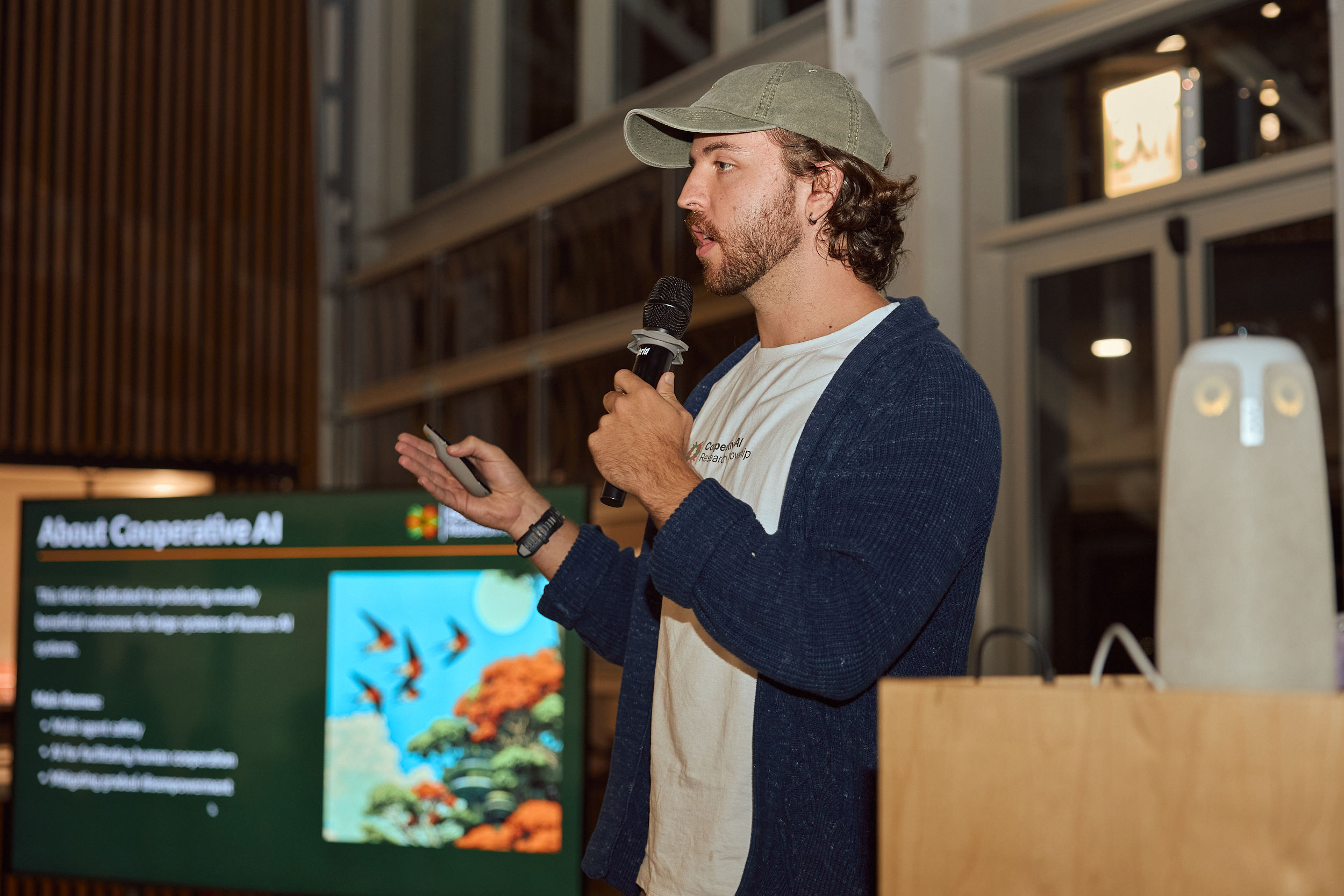
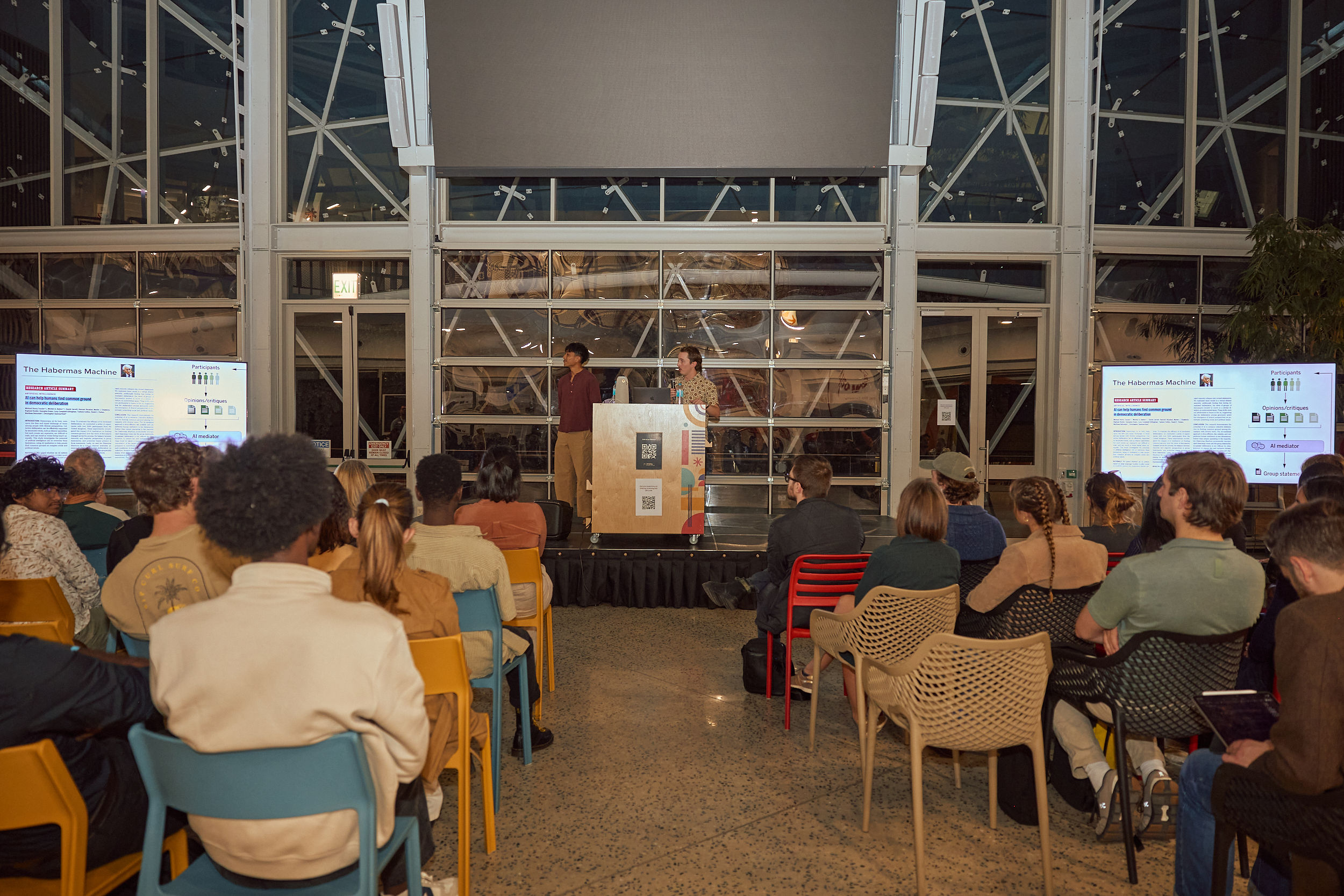
The programme opened with a retreat held at Bodhi Khaya and concluded with a closing showcase at the University of Cape Town attended by more than 80 guests. The evening featured presentations from selected fellows, including Oscar Duys and Joseph Low, who presented Habermolt, a deliberation tool exploring whether agents can elicit and faithfully represent human perspectives in multi-agent deliberation settings; Omer Abead, who presented a benchmark framework for evaluating agents’ ability to determine when sharing private information within agent networks is appropriate; and Akash Kundu, whose research focused on similarity-based cooperative equilibria. Fellows’ research posters are available here.
The fellowship served to develop junior cooperative AI researchers and as an investment in the nascent AI safety ecosystem in Africa. Leo Hyams, Executive Director at AI Safety South Africa commented:
'This fellowship has proved that we run world-class programmes from Cape Town and produce phenomenal outcomes. I am extremely thankful for the support of our partners in making this fellowship a reality. I think that in the future we will look back at this fellowship as a seminal moment for the AI safety ecosystem in Cape Town and I look forward to seeing the impact of this fellowship unfold.'
The fellowship is a collaboration between the Cooperative AI Foundation (CAIF) - who provided funding and research oversight - Principles of Intelligence (PrincInt), The AI Initiative at the University of Cape Town (UCT) and AI Safety South Africa (AISSA). AISSA drove the project, building on PIBBSS’ fellowship methodology. This initiative was also funded by the AI Safety Tactical Opportunities Fund, the Survival and Flourishing Fund and GPU compute was provided by Lambda.
.jpg)
June 8, 2026


